Setlists
Setlists that match how a set actually goes.
Not a playlist. A running order you can mark up for one gig, that everyone playing it reads.
The set is the part you work on together
A setlist isn't a private list. It's the part of this the whole band works on. Whoever's building the set adds the songs, fixes the order, drops the tempo on the closer and writes a note about the ending — and everyone who opens that setlist sees exactly that.
Meanwhile nobody's library has changed. A song in a setlist is a copy of the chart it came from, and the two are independent from that moment: editing one never touches the other, in either direction.
That's precisely what makes marking a set up freely a safe thing to do. The charts you keep are yours alone to change, and the set is where the band meets.
Your chart
78 bpm · unchanged
6/8 feel — arpeggiate throughout
Verse 1
Am      C        D        F
There is a house in New Orleans
Am        C      E
They call the Rising Sun
Am       C       D          F
Saturday's set
72 bpm · everyone sees this
Slower this set. Hold the last chord — wait for the drums.
Verse 1
Am      C        D        F
There is a house in New Orleans
Am        C      E
They call the Rising Sun
Built from your charts
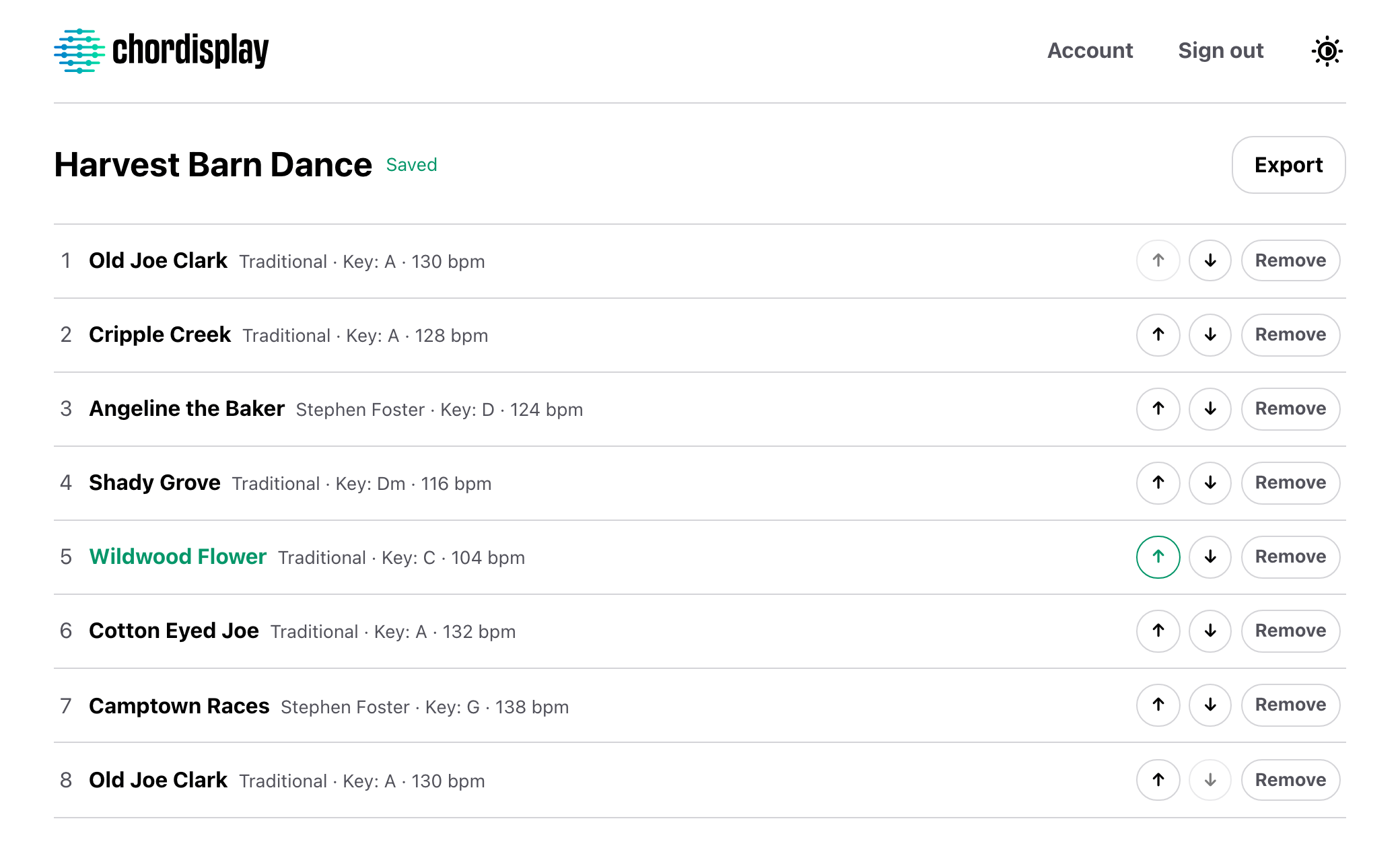
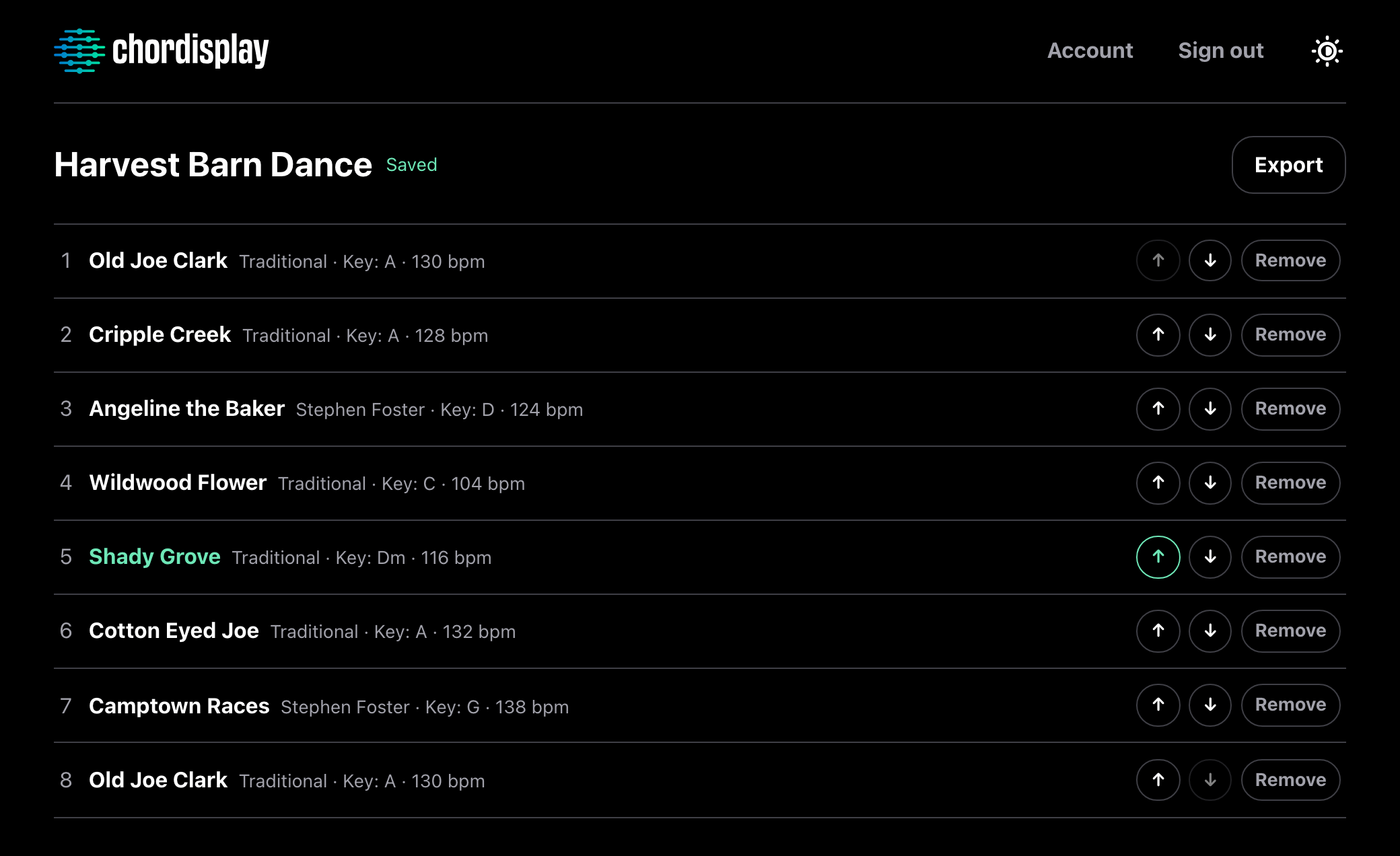
Search your library by title, add songs, and move them up and down until the order matches how you'll play it. While you're on stage, prev and next step through the set — no going back to a list between songs.
Creating a set is the Owner's job, because a setlist is also the thing access is granted on — see below. Everything after that, the whole business of getting the running order right, is shared work.
The same song, twice
A song can appear more than once in a set, and each appearance is its own entry. The encore reprise can be slower, shorter, or in a different arrangement than the version you opened with, and neither one touches the other.
Who can change a set
You, and the Editors you've put on that set. An Editor can add, remove, reorder and change songs — everything about the running order — but can't rename or delete the setlist itself, and can't touch the charts in your library. A Viewer reads it and plays from it, and changes nothing.
Both are free, however many there are. And both are onthat setlist, not on your library: the Saturday band can't see Friday's set, and neither can browse the rest of your charts. When you want an Editor to be able to add songs, you choose what they add from — one category, or everything.
Build the set once. Everyone plays from it.
Add the band to the set — free, however many of you there are.